
Back
Cybersecurity & Protection
How to Reduce Phishing Exposure Before It Turns into Business Disruption
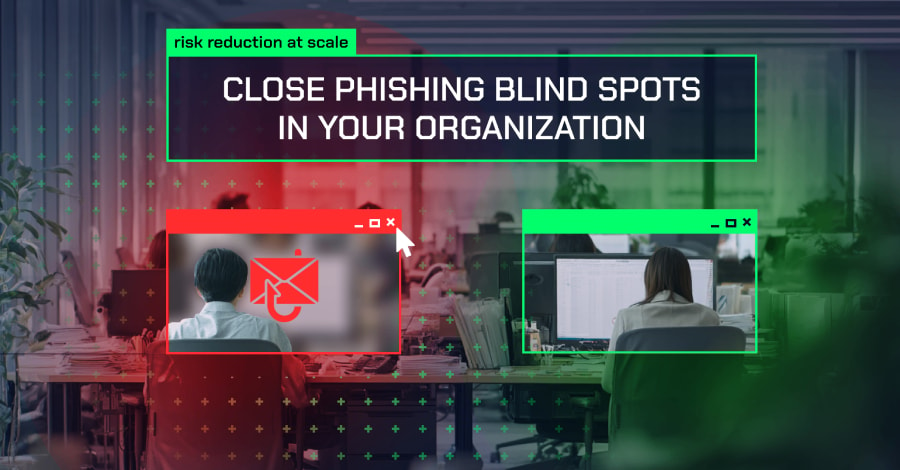
What happens when a phishing email looks clean enough to pass through security, but dangerous enough to expose the business after one click? That is the gap many SOCs still struggle with: the attacks that leave teams unsure what was exposed, who else was targeted, and how far the risk has spread.

May 12, 2026
Cybersecurity researchers have discovered four new npm packages containing information-stealing malware, one of which is a clone of the Shai-Hulud worm open-sourced by TeamPCP.
What happens when a phishing email looks clean enough to pass through security, but dangerous enough to expose the business after one click? That is the gap many SOCs still struggle with: the attacks that leave teams unsure what was exposed, who else was targeted, and how far the risk has spread.
Why Phishing Creates Bigger Risk for Security Leaders Now
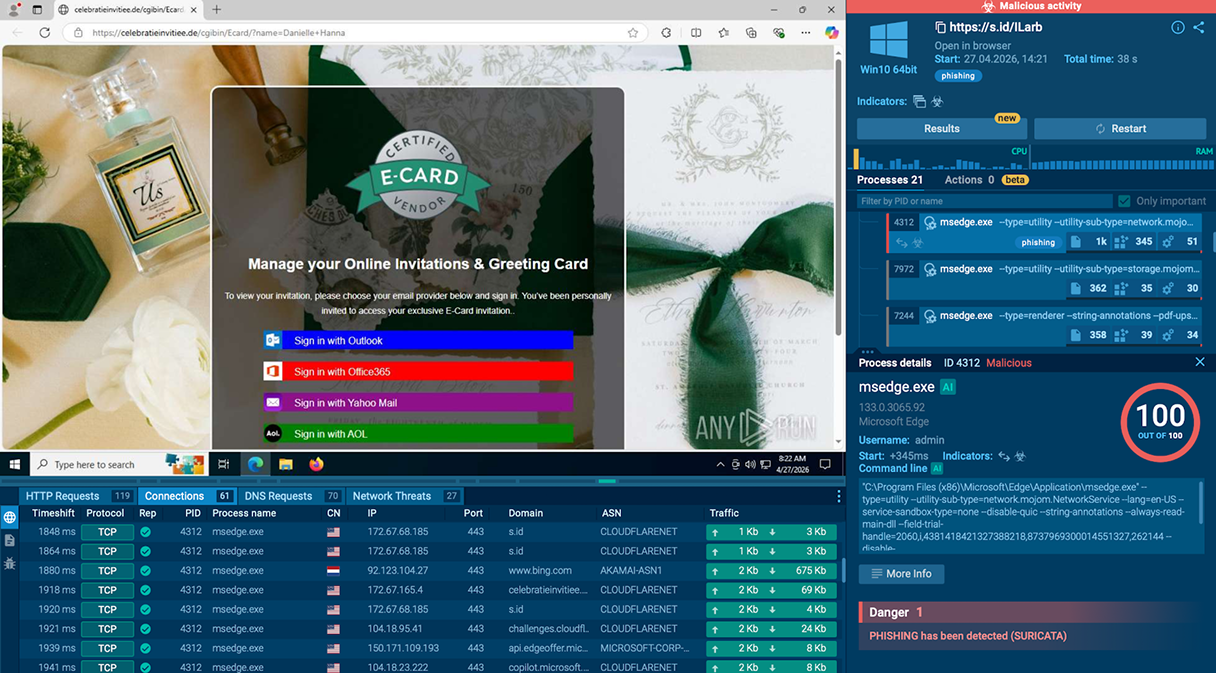
Phishing has become harder to manage because it no longer creates one clear, easy-to-contain event. A single click can turn into identity exposure, remote access, data access, or a wider investigation before the team has a clear picture.
What makes it a bigger concern now:
Puts identity at the center of the attack: Stolen credentials can expose email, SaaS apps, cloud platforms, and internal systems.
Weakens confidence in MFA: Some campaigns capture OTP codes, so “MFA is enabled” is not always enough.
Hides behind normal user behavior: CAPTCHA checks, login pages, invites, and trusted tools can make early signals look routine.
Slows business-level decisions: Teams may need time to confirm what was accessed, who was affected, and whether containment is needed.
Increases operational exposure: The longer phishing activity stays unclear, the greater the chance of account abuse, remote access, or business disruption.





Talk with our expert
Speak with an Ortikon specialist and explore solutions tailored to your
organization’s infrastructure needs.

Phone:
+355 69 402 22 11

Email:
info@ortikon.net
Schedule a Consultation

Company

Services
Resources

Copyright ©️ 2026 Ortikon. All rights reserved


EN


Let’s Talk
Back
Cybersecurity & Protection
How to Reduce Phishing Exposure Before It Turns into Business Disruption
What happens when a phishing email looks clean enough to pass through security, but dangerous enough to expose the business after one click? That is the gap many SOCs still struggle with: the attacks that leave teams unsure what was exposed, who else was targeted, and how far the risk has spread.
May 12, 2026
What happens when a phishing email looks clean enough to pass through security, but dangerous enough to expose the business after one click? That is the gap many SOCs still struggle with: the attacks that leave teams unsure what was exposed, who else was targeted, and how far the risk has spread.
Why Phishing Creates Bigger Risk for Security Leaders Now
Phishing has become harder to manage because it no longer creates one clear, easy-to-contain event. A single click can turn into identity exposure, remote access, data access, or a wider investigation before the team has a clear picture.
What makes it a bigger concern now:
Puts identity at the center of the attack: Stolen credentials can expose email, SaaS apps, cloud platforms, and internal systems.
Weakens confidence in MFA: Some campaigns capture OTP codes, so “MFA is enabled” is not always enough.
Hides behind normal user behavior: CAPTCHA checks, login pages, invites, and trusted tools can make early signals look routine.
Slows business-level decisions: Teams may need time to confirm what was accessed, who was affected, and whether containment is needed.
Increases operational exposure: The longer phishing activity stays unclear, the greater the chance of account abuse, remote access, or business disruption.



Talk with our expert
Speak with an Ortikon specialist and explore solutions tailored to your
organization’s infrastructure needs.
Phone:
+355 69 402 22 11
Email:
info@ortikon.net
Schedule a Consultation
Company

Services
Resources

Copyright ©️ 2026 Ortikon. All rights reserved
Services

Industries
Resources

Company
EN
Let’s Talk
Back
Cybersecurity & Protection
Four Malicious npm Packages Deliver Infostealers and Phantom Bot DDoS Malware
Cybersecurity researchers have discovered four new npm packages containing information-stealing malware, one of which is a clone of the Shai-Hulud worm open-sourced by TeamPCP.
May 18, 2026
Cybersecurity researchers have discovered four new npm packages containing information-stealing malware, one of which is a clone of the Shai-Hulud worm open-sourced by TeamPCP.
Talk with our expert
Speak with an Ortikon specialist and explore solutions tailored to your
organization’s infrastructure needs.
Phone:
+355 69 402 22 11
Email:
info@ortikon.net
Schedule a Consultation
Company
Services
Resources

Copyright ©️ 2026 Ortikon. All rights reserved